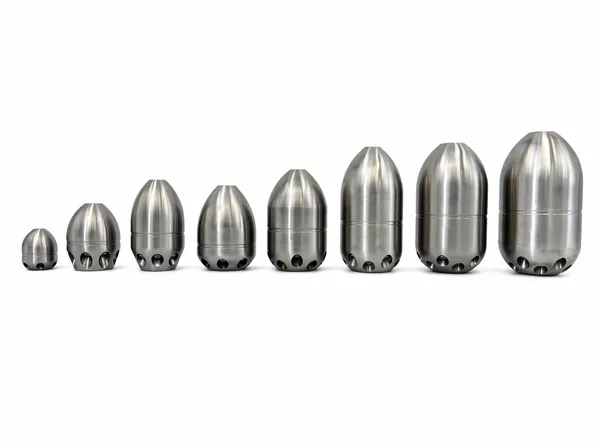
Residential branch drains keep getting re-blocked because standard jet nozzles only punch a hole through the middle. The Tapered Bulb Nozzle combines a forward piercing jet with two swirling rear jets and a self-rotating bulb head to clean the full pipe wall — handling grease, hair, roots, sediment, and more in DN80–DN150 lines.
If you deal with residential drain cleaning, you know the pattern: the call comes in, you show up with your jetter, and the blockage turns out to be something that resists every standard nozzle you try. Grease that's hardened like wax. Hair woven into a dense mat. Tree roots working their way through a joint. Sand and sediment packed at the bottom of a downspout line.
Standard jet nozzles — even high-pressure ones — often just punch a hole through the middle and leave the walls coated. Then three weeks later, you're back at the same address. The Tapered Bulb Nozzle exists to change that cycle: it's a self-rotating, swirl-action nozzle designed for DN80–DN150 residential and light-commercial branch lines, where most of these recurring headaches live.
Why Residential Branch Lines Keep Coming Back
Residential and light-commercial branch drains (roughly 3 to 6 inches / DN80–DN150) are the workhorses of any drain cleaning route. They're also the lines that get re-blocked most often, because the materials that collect in them are sticky, layered, and firmly attached to the pipe wall.
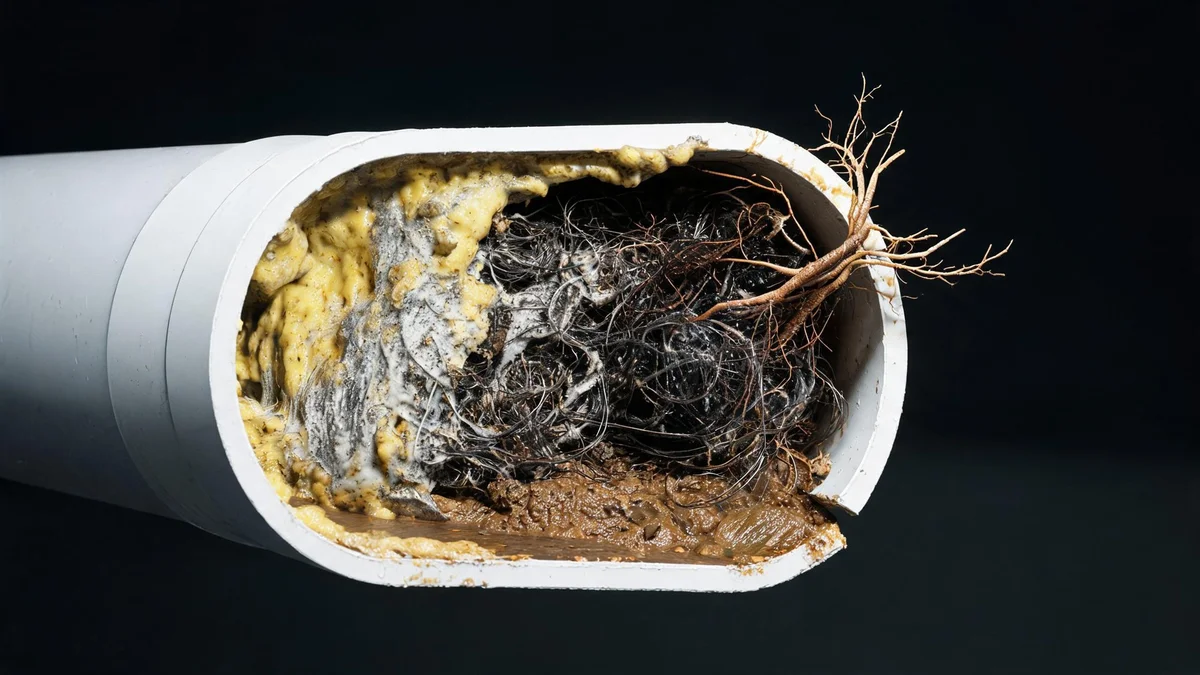
The problem with standard straight-jet nozzles is geometry. A fixed rear jet only cleans the surface directly in its path. In a pipe with uneven deposits, that means a lot of wall area only gets a glancing hit. The water pushes the debris around but doesn't strip it. A rotating nozzle solves this by sweeping the full circumference of the pipe, but not all rotating nozzles are built the same. What makes the Tapered Bulb different is the combination of a single forward piercing jet, two angled rear swirl jets, and a smooth bulb-shaped body that slides through bends without catching.
Meet the Tapered Bulb Nozzle
The Tapered Bulb Nozzle is a high-pressure rotating sewer nozzle — sometimes called a water rat or bulb-type rotating nozzle — built specifically for residential and light-commercial branch pipe cleaning. Made from hardened stainless steel, it combines three cleaning actions into one compact body.
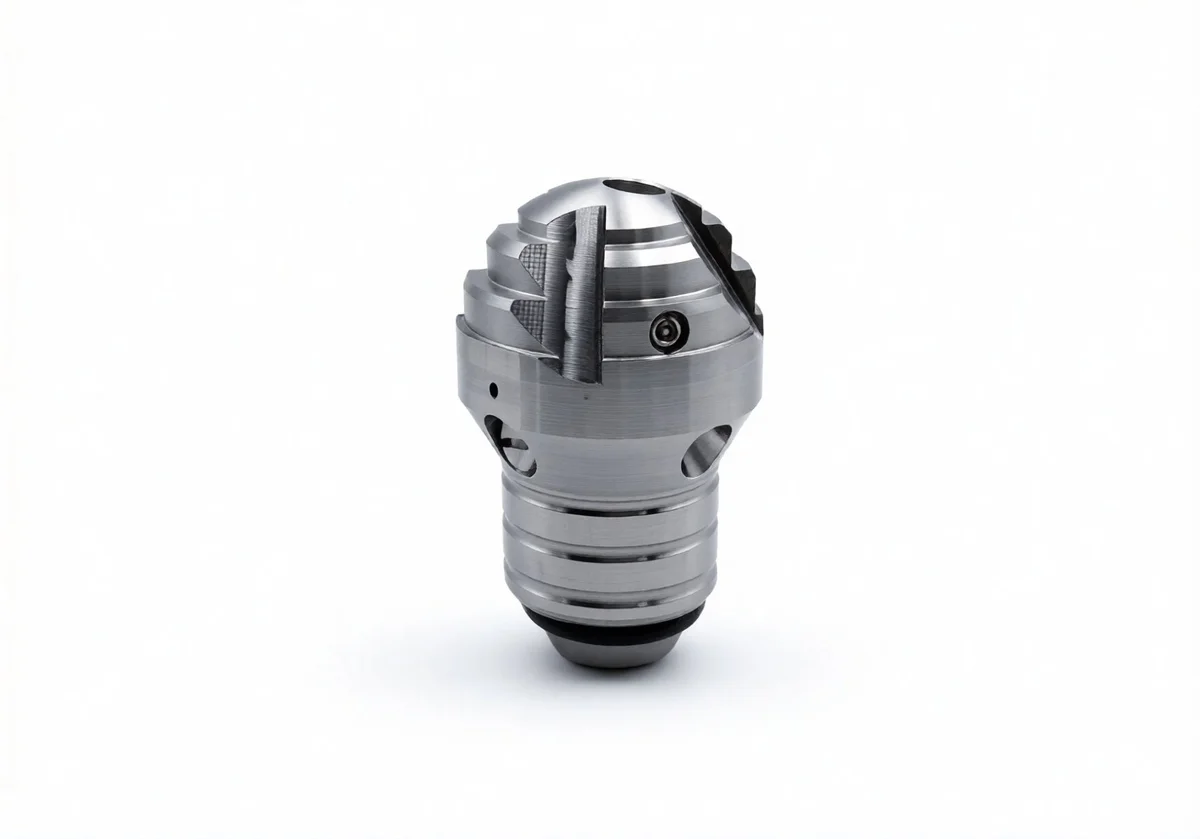
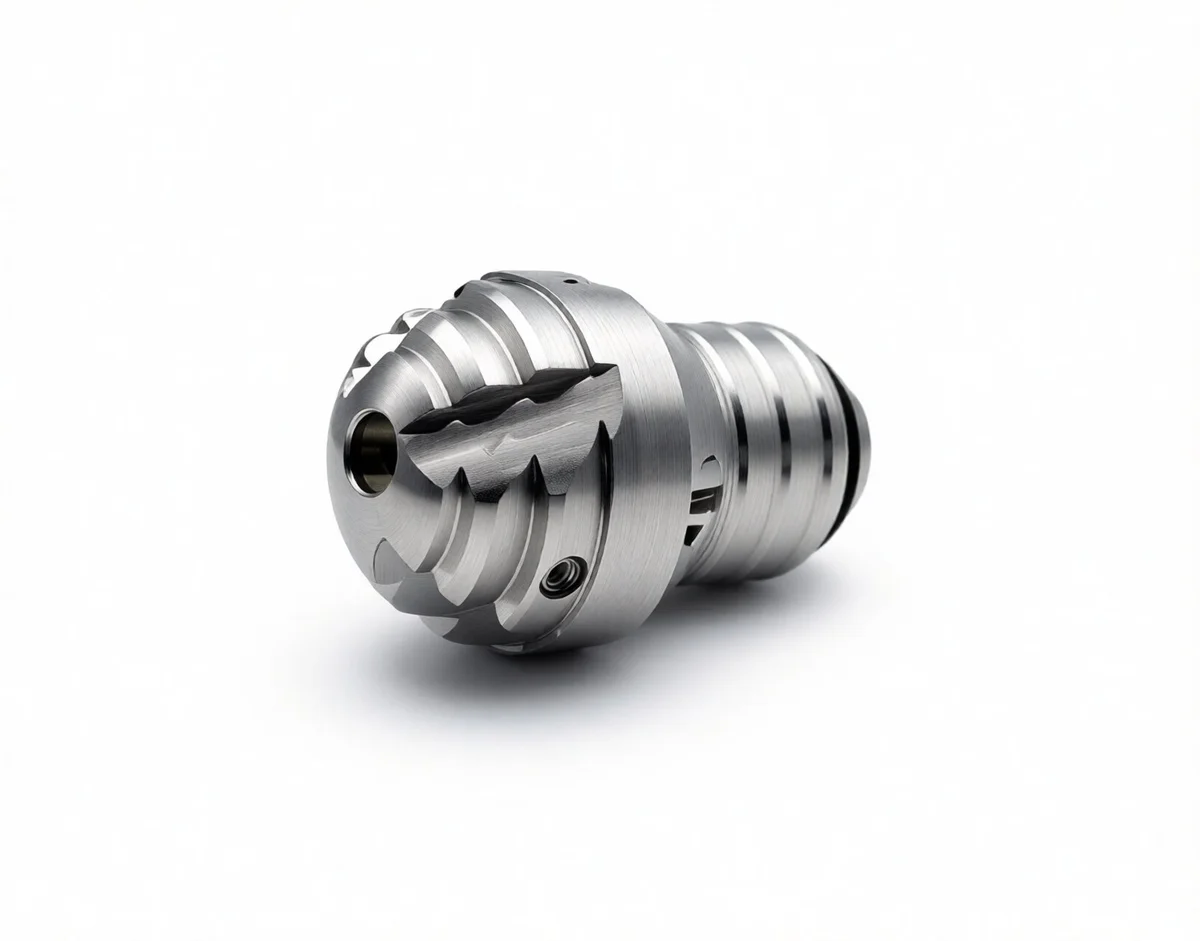
Its working principle is straightforward but effective:
- Forward jet (1 × M6) — a single concentrated jet that pierces the core of a blockage, opening a channel through compacted mud, grease clumps, and tangled roots.
- Rear swirl jets (2 × M6) — two rear-facing, angled jets do double duty: their reverse thrust self-propels the nozzle and hose forward without you having to force the hose, while their angled, swirling spray scours the pipe wall 360°, peeling grease, soap scum, and sediment off the surface.
- Stepped bulb head — the hardened, stepped spherical front acts like a mechanical scraper, physically chipping at hard deposits as the nozzle rotates and advances.
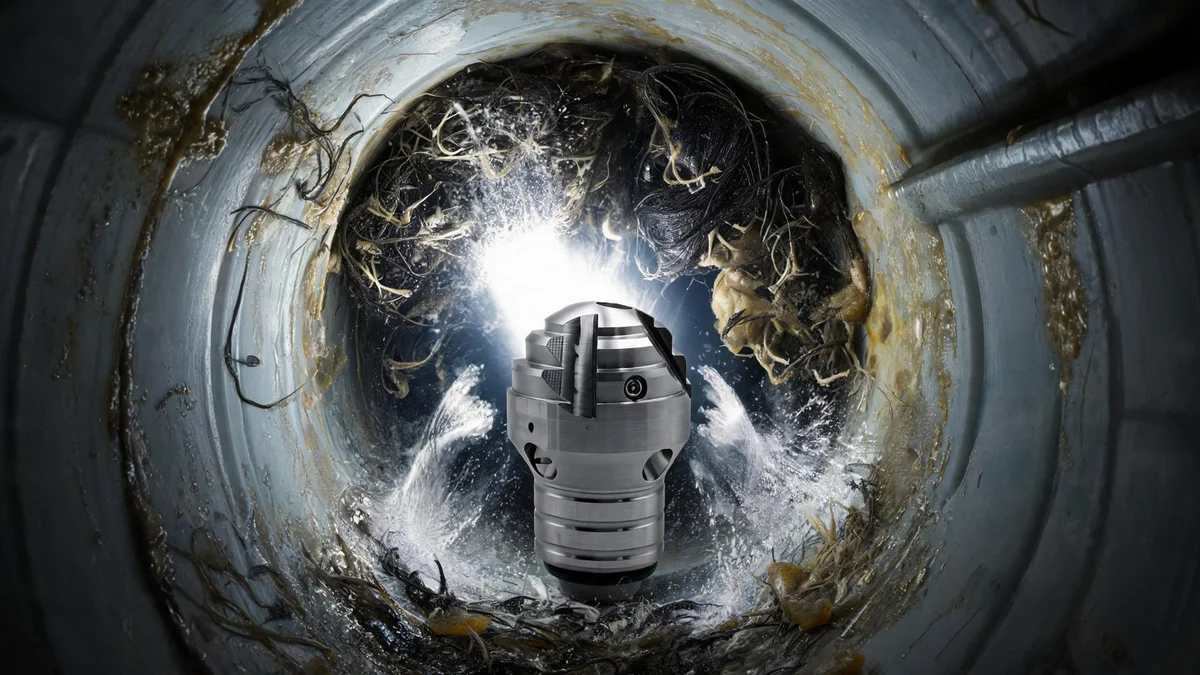
Six Blockage Scenarios It Handles
Here's where the Tapered Bulb Nozzle earns its place in your truck. These are the six most common residential and light-commercial blockage scenarios, and how the nozzle handles each one.
1. Kitchen Grease & Food Waste
Kitchen sink lines and restaurant floor drains are where grease goes to harden. Hot cooking oil cools, solidifies, and sticks to the pipe wall, catching food particles until flow is reduced or stopped. The swirling rear jets strip the grease layer from the wall, and the self-flushing action carries the loosened grease back to the manhole. For restaurants, a regular cleaning pass with this nozzle can prevent the grease trap from becoming a recurring emergency.
2. Bathroom Hair & Soap Scum
Bathroom drains are dominated by hair and soap scum — a combination that mats together and adheres stubbornly. The forward jet cuts through the hair mat, while the 360° swirling action removes the soap scum ring from the pipe wall. Because the nozzle self-propels, you can run the full length of a bathroom branch line in one pass.
3. Restaurant Grease Trap Outlet Lines
After a grease trap, the outlet line is where the heaviest, most hardened grease accumulates. This is one of the Tapered Bulb's strongest applications — the stepped bulb head mechanically breaks up hardened grease while the swirl jets clean the wall behind it. It's far more effective than a straight jet, which tends to tunnel through grease and leave the coating intact.
4. Rainwater Downspouts & Yard Drains
Roof downspouts and yard drainage lines collect sediment, leaves, and silt that settle at the bottom and reduce capacity. The nozzle's forward jet clears the path, and the rear jets flush the sediment back. The smooth bulb body handles the bends common in downspout configurations without getting hung up.
5. Landscape & Garden Drainage (Tree Roots)
Tree roots finding their way into landscape drains is a classic problem. While the Tapered Bulb isn't a heavy root-cutting nozzle, its forward jet and rotating stepped head can shred fine roots and cut through fibrous root tangles in small branch lines. For thicker, established roots, you'd still reach for a dedicated root cutter, but for light to medium root intrusion in DN80–DN150 lines, the Tapered Bulb often does the job without needing a second tool.
6. Small Industrial Workshop Wastewater Branches
Small manufacturing and workshop lines deal with soft scale, slurry, and sediment that settles in low points. The Tapered Bulb's scouring action removes soft scale buildup and flushes sediment, restoring pipe capacity. For harder crystalline scale (cement, heavy calcium carbonate), a dedicated cutting nozzle is still required, but for the daily soft-deposit cleaning that keeps workshop lines flowing, the Tapered Bulb is well suited.
What Makes It Different from a Standard Water Rat
The key difference is swirl plus rotation. A standard straight-jet water rat moves debris but doesn't really clean the wall — it punches a channel. The Tapered Bulb's angled rear jets create a swirling vortex that doesn't just push material aside, it strips it off the pipe surface. That's the difference between a pipe that looks clean from the camera view and a pipe that actually stays clean for months.
The other big advantage is the bulb shape. A smooth, rounded profile glides through 90° bends, Y-junctions, and slight reducers without catching or flipping. For residential work where pipe layouts are full of bends and offsets, that's not a minor detail — it determines whether you finish the job or spend an hour trying to get your nozzle unstuck.
Technical Specifications
| Parameter | Specification |
|---|---|
| Part # | BTDP |
| Name | Tapered Bulb Nozzle |
| Material | Hardened Stainless Steel |
| Forward Jet | 1 × M6 |
| Side Jet | — |
| Rear Jet | 2 × M6 |
| Thread | 3/8" F |
| Flow | Customized |
| Pressure | Customized |
| Dimensions | Φ50 × 78.5 mm |
Usage Tips
- Match to pipe size. The Tapered Bulb is designed for DN80–DN150 (3–6 inch) lines. For larger municipal mains, a higher-flow multi-jet nozzle is more appropriate.
- Let it pull. The rear jets provide self-propulsion — don't force the hose. Guide it, let the nozzle do the work of pulling itself forward.
- Make multiple passes for heavy buildup. For thick grease or heavy sediment, feed in, pull back, and feed in again. Each pass strips another layer.
- Not for extreme hard scale. Cement scale and heavy crystalline calcium carbonate need a dedicated cutting nozzle. The Tapered Bulb handles grease, soap scum, sediment, light roots, and soft scale — not rock-hard crystalline deposits.
The Bottom Line
For the residential and light-commercial branch lines that make up the bulk of most drain cleaning routes, the Tapered Bulb Nozzle is a genuine upgrade over a standard straight-jet water rat. The forward jet opens the blockage, the swirling rear jets clean the full pipe wall, and the bulb body gets through the bends. It's the kind of nozzle that doesn't just finish the job — it finishes it in a way that keeps the customer from calling back next month.
If your residential jobs keep coming back with the same grease, hair, and root problems, it might be time to stop punching holes and start cleaning walls.
HenSing
Industrial Cleaning Equipment Specialist · Horizon Integrity