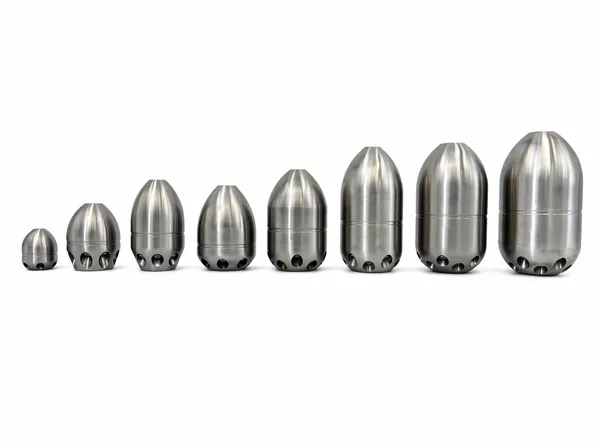
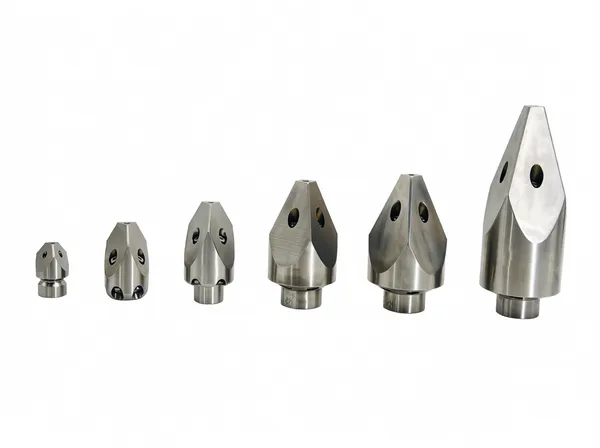
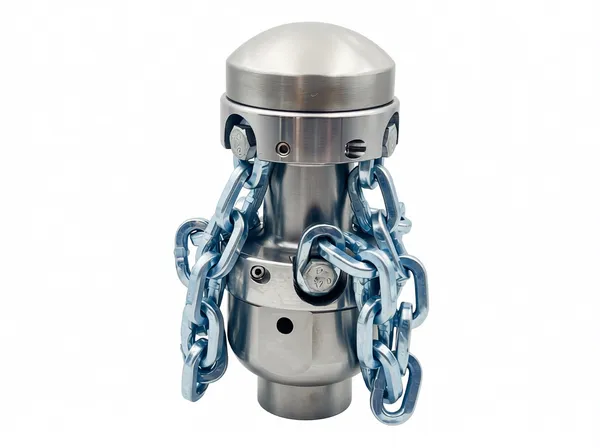
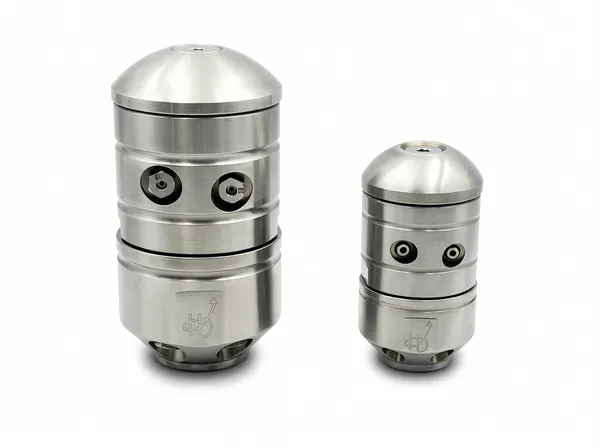
How to break through hard scale, lime deposits, and tree roots in sewer pipes. A practical guide to rotating sewer nozzles — Pagoda and Rock Pagoda nozzles explained. Learn which nozzle handles each blockage type and how to get the job done faster.
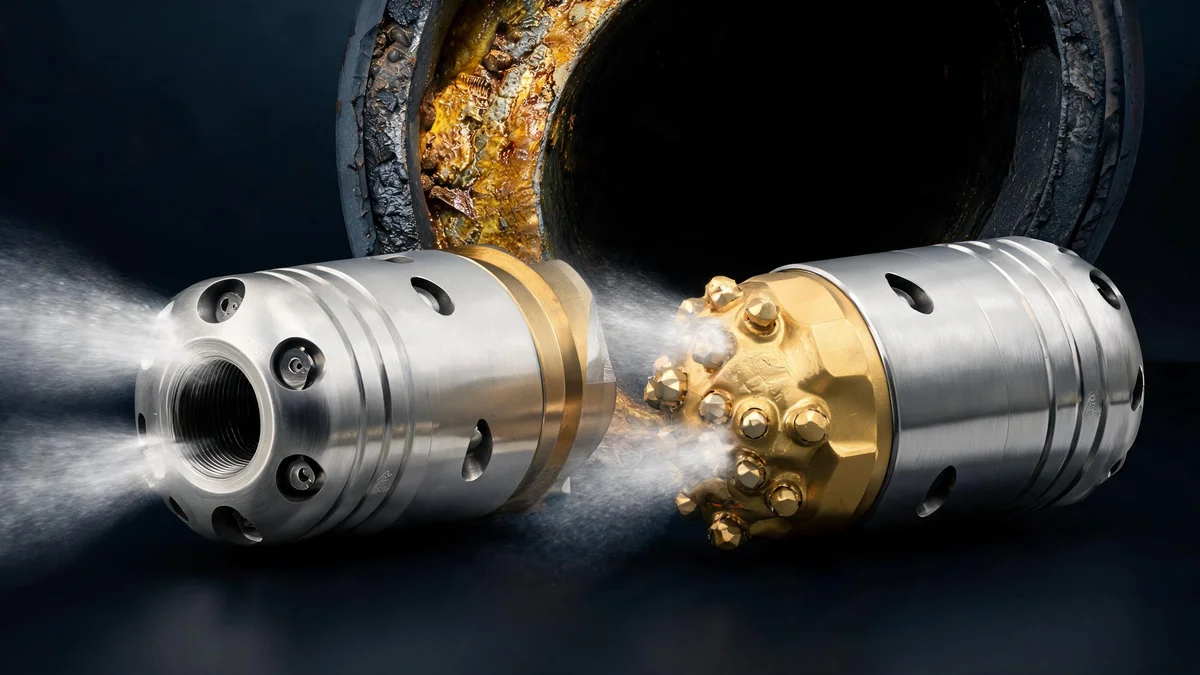
How to Break Through Hard Scale, Lime & Roots
in Sewer Pipes: A Rotating Nozzle Guide
Grease, mineral scale, tree roots — when standard jetting nozzles won't cut it, rotating nozzles are the tools that get the pipe flowing again. Here's what they are, how they work, and which one to pull from your truck.
If you've been in the drain cleaning business for more than a week, you've already run into the jobs where a standard jet nozzle just bounces off the problem. Hard mineral scale that glints like ceramic. Tree roots that have woven themselves into a living plug. Lime deposits that have been building up for a decade. You crank up the pressure, you feed more hose, and the pipe is still half-blocked when you pull out.
The problem isn't your machine — it's your nozzle. A fixed jet nozzle only hits what's directly in front of each orifice. In a pipe with uneven buildup or root intrusion, that means a lot of surface never sees a direct hit. The water glances off, the debris stays put, and you're back at the same manhole three months later.
That's where rotating sewer nozzles change the game. Instead of firing in fixed directions, these nozzles spin as water flows through them, delivering a sweeping 360° high-impact jet pattern that strips deposits from every square millimeter of pipe wall. Couple that with a hardened front head designed to physically penetrate and break up blockages, and you've got a tool that turns "impossible" jobs into routine ones.
In this guide, we'll walk through the two main rotating nozzle types — the Pagoda Nozzle and the Rock Pagoda Nozzle — explain how they work, compare their strengths, and help you figure out which one belongs in your nozzle inventory.
What's Actually Blocking That Pipe?
Not all pipe blockages are created equal, and knowing what you're up against is half the battle. Here are the three most stubborn culprits drain crews deal with on a regular basis:
1. Hard Mineral Scale & Lime Deposits
This is the silent killer of pipe capacity. Over years, minerals in the water — calcium, magnesium, iron — precipitate out and build up on pipe walls like rings inside a kettle. In concrete and clay pipes, this scale can reach several centimeters thick, reducing pipe diameter by 30-50% without anyone noticing until flow drops dramatically.
The problem with scale is that it's hard. A standard water jet may smooth the surface a little, but it won't break through a thick, hardened deposit. You need mechanical action combined with high-impact water.
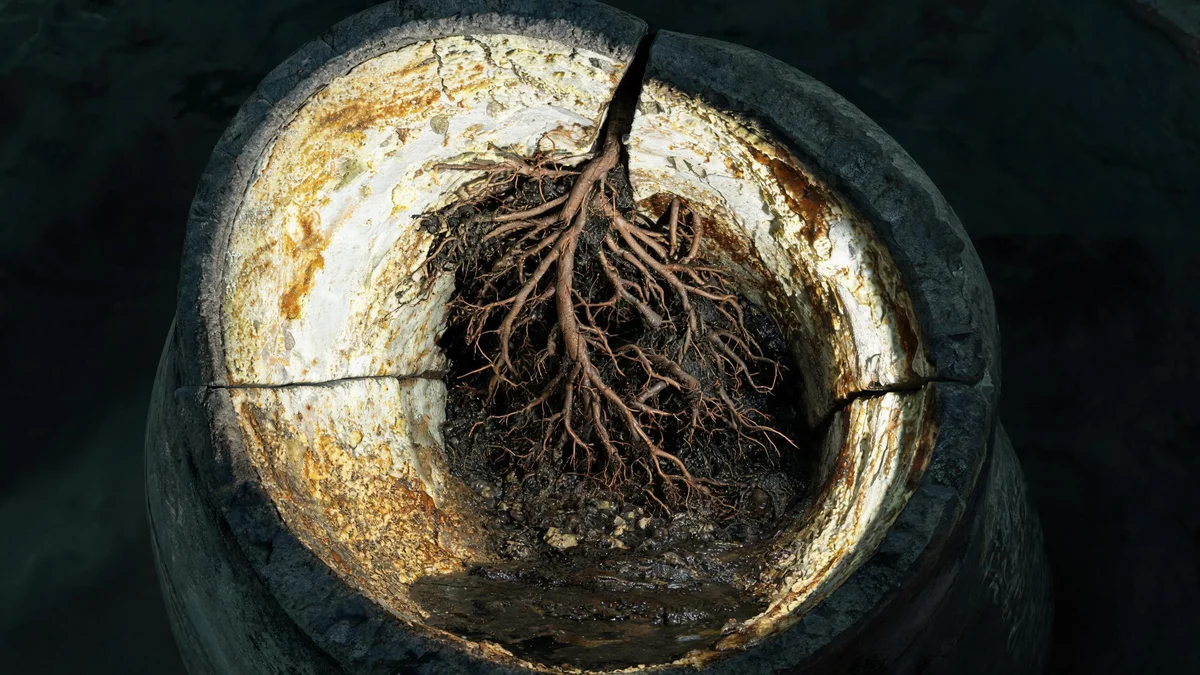
2. Tree Root Intrusion
Tree roots find their way into sewer lines through the tiniest cracks and joints. Once inside, they grow and spread, catching grease and debris and forming dense root mats that can completely block a pipe. Roots are fibrous, tough, and anchored — standard jetting may strip the small feeder roots but the main mass stays intact and regrows quickly.
Getting rid of roots requires cutting or grinding action at the front of the nozzle, plus thorough scouring of the pipe walls to remove remaining root hairs.
3. Grease & Sediment Buildup
Grease and FOG (fats, oils, grease) combined with sediment create a sticky, layered deposit that coats pipe bottoms and walls. In kitchen lines and restaurant sewers, this can turn into something like concrete over time. While softer than mineral scale, the combination of grease binding sediment together makes it surprisingly resistant to standard jetting.
We've seen crews spend hours on a single pipe with a standard jet nozzle, only to have the blockage return within weeks. A rotating nozzle on the same job often clears it in a fraction of the time — and the results last because every surface gets cleaned, not just the path the jet happens to hit.
Why Standard Nozzles Fall Short
| Method | How It Works | Best For | Limitations |
|---|---|---|---|
| Standard Jet Nozzle | Fixed rear/forward jets, straight-line action | Soft debris, light sediment, regular maintenance | Cannot break hard scale; uneven coverage; roots regrow quickly |
| Rotating Nozzle | Spinning 360° jet pattern + hardened front head | Hard scale, roots, lime, grease, heavy deposits | Requires sufficient flow/pressure; more expensive upfront |
| Root Saw / Mechanical Cutter | Physical cutting blades on rotating shaft | Severe root intrusion | Risk of pipe damage; doesn't clean pipe walls; no flushing action |
Rotating Nozzles: The Basics
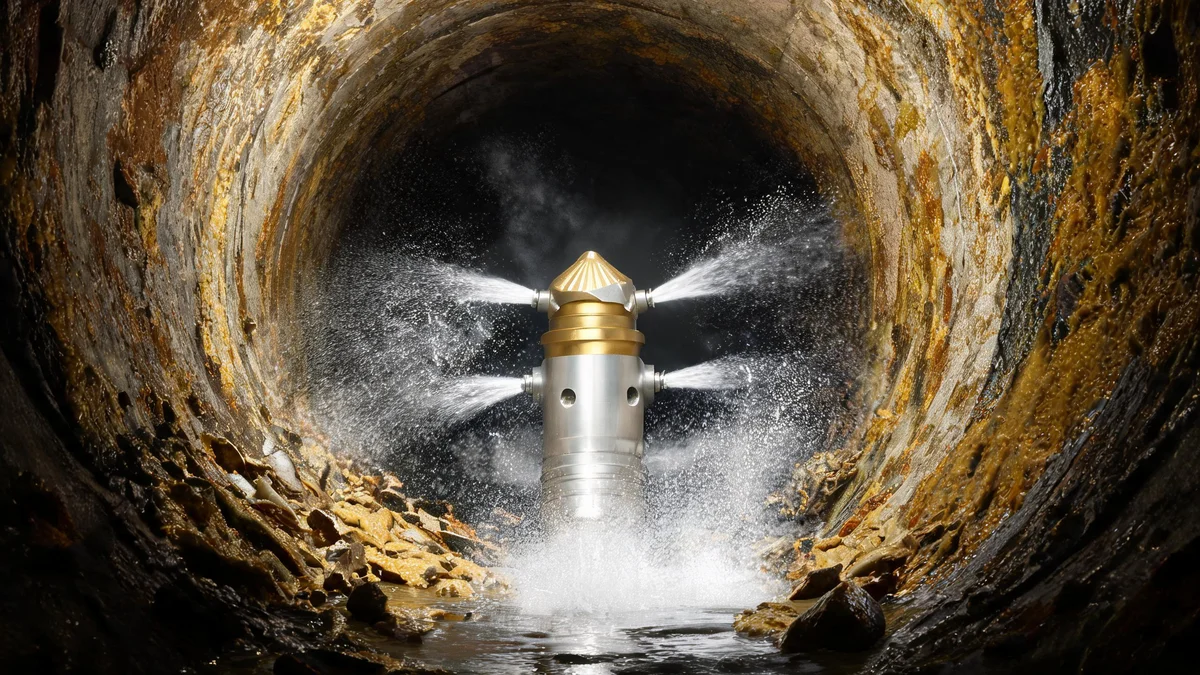
A rotating sewer nozzle works on a deceptively simple principle: water pressure drives the nozzle body to spin, and the side-facing jets rotate with it, creating a continuous sweeping pattern that covers the entire circumference of the pipe.
The Two Key Components
Rotating Side Jets
4 side-mounted ceramic nozzles spin continuously as water flows, creating a 360° scouring action that strips deposits from every angle of the pipe wall.
Rear Jets
6 rear-facing nozzles provide forward thrust to pull the nozzle through the pipe and flush dislodged debris back toward the manhole.
Hardened Front Head
A precision-machined front head (pagoda-shaped or PDC button-equipped) physically penetrates, chips, and breaks up compacted blockages as the nozzle advances.
Replaceable Ceramic Inserts
All jet orifices use replaceable ceramic inserts that resist wear far better than drilled holes — extending service life several times over.
Why Rotation Makes All the Difference
Imagine you're trying to clean a dirty pipe with a garden hose. You can aim it at one spot and get it clean, but the rest stays dirty. Now imagine the hose end is spinning — the water sweeps around in a circle, cleaning everything it touches. That's the difference between a fixed nozzle and a rotating one.
The rotating action means every spot on the pipe wall gets hit by the full force of the water jet — not just a glancing blow. For hard scale, this repeated high-impact hammering effect chips away at deposits layer by layer. For roots, it strips away fibrous material and cuts through smaller roots entirely.
Side jets at 90° give the best wall-scouring action — the water hits the pipe wall dead-on. Rear jets at 20-35° backward angle balance forward thrust with wall cleaning. The exact angle determines how fast the nozzle self-propels vs. how much energy goes into cleaning.
Pagoda Rotating Nozzle: The Hard Scale Specialist
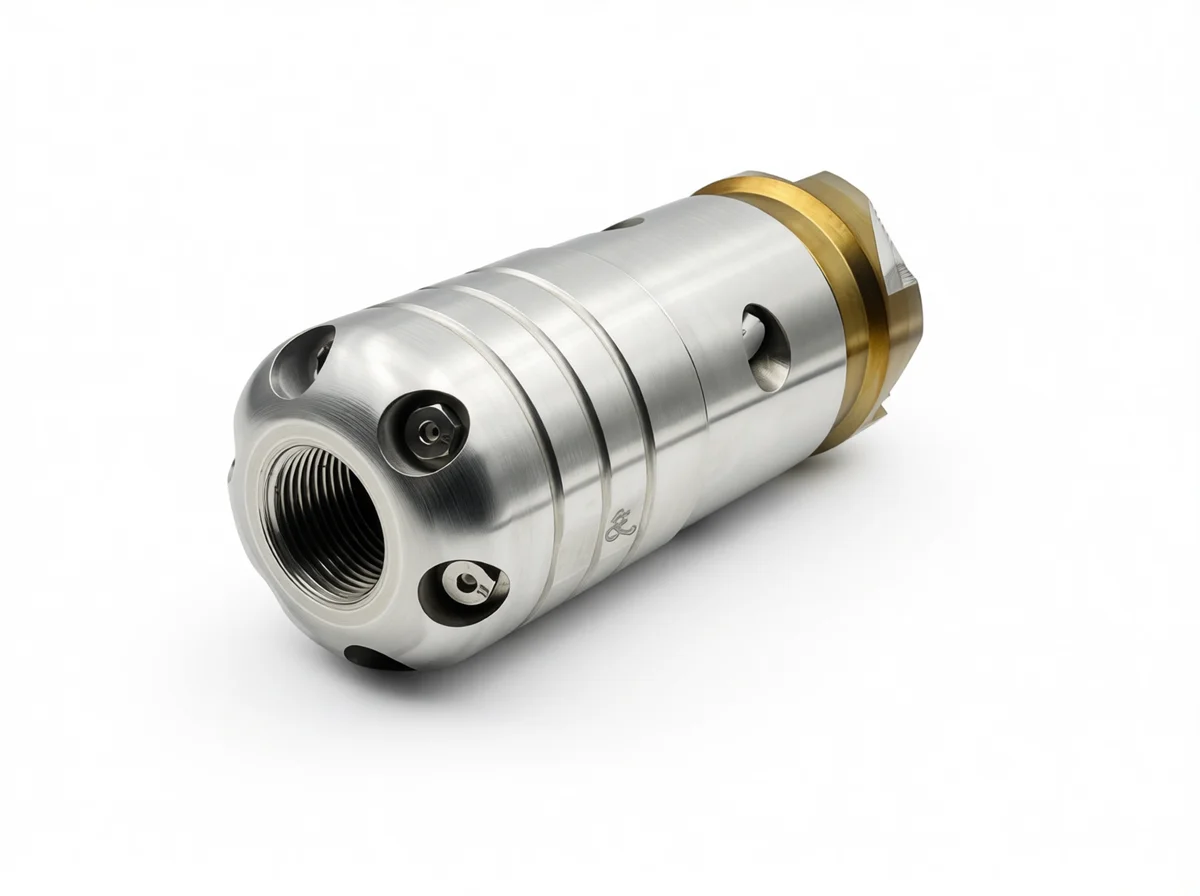
The Pagoda Rotating Nozzle gets its name from the distinctive tiered, pyramid-shaped front head — shaped like the tiers of a pagoda temple. This geometric design is more than just looks: each stepped edge acts as a chisel, concentrating force into sharp contact points that chip and break hard mineral scale as the nozzle spins and advances.
Built for Hard Deposits
Made from wear-resistant hardened stainless steel, the Pagoda nozzle is designed to take a beating. The golden pagoda head maintains its sharp edges even after repeated use on concrete and clay pipes with heavy mineral buildup. When you're up against years of limescale or hardened grease-sediment mix, this is the nozzle that will actually make progress instead of just polishing the surface.
How It Cleans
The Pagoda nozzle combines three cleaning actions into one pass:
- Penetration The sharp pagoda head drills into compacted blockages, breaking up the core of the obstruction so water can get behind it.
- 360° Scouring Four rotating side jets at 90° sweep the entire pipe circumference, blasting away scale and deposits from every angle.
- Flushing & Propulsion Six rear jets at 35° push the nozzle forward while flushing dislodged debris back down the pipe, clearing the path as it goes.
Technical Specifications
| Parameter | CBT0.5 | CBT1 | CBT3 | CBT5 |
|---|---|---|---|---|
| Part # | CBT0.5 | CBT1 | CBT3 | CBT5 |
| Material | Wear-resistant Hardened Stainless Steel | |||
| Hose Connection | 3/8" F | 3/4" F | 1" F | 1" F |
| Flow (LPM) | 60 | 170 | 215 | 215 |
| Pressure (Bar) | 137 | 137 | 172 | 172 |
| Rear Jets | 6 x M6 | 6 x M6 | 6 x M10x1 | 6 x M10x1 |
| Rotating Jets | 4 x M6 | 4 x M6 | 4 x M10x1 | 4 x M10x1 |
| Jet Angle Backward | 35° | 20° | 25° | 25° |
| Jet Angle Sideway | 90° | 90° | 90° | 90° |
| Dimensions (Φ x L mm) | 36 x 98 | 49 x 121 | 74 x 172 | 74 x 220 |
| Working DN (mm) | 60-150 | 80-200 | 100-300 | 100-300 |
| Weight (Kg) | 0.5 | 1 | 3 | 5 |
Interface Thread: NPT or BSPP available on request. Max Pressure: 172 Bar. Different flows and pressures available on request. All ceramic inserts are replaceable.
Applications
The Pagoda nozzle is your go-to when the pipe is lined with hard mineral scale or compacted deposits that a standard nozzle can't touch. It's also the right choice for general descaling jobs, pipe rehabilitation prep, and pre-CCTV inspection cleaning where you need the pipe walls thoroughly exposed.
Rock Pagoda Nozzle: PDC Power for the Toughest Jobs
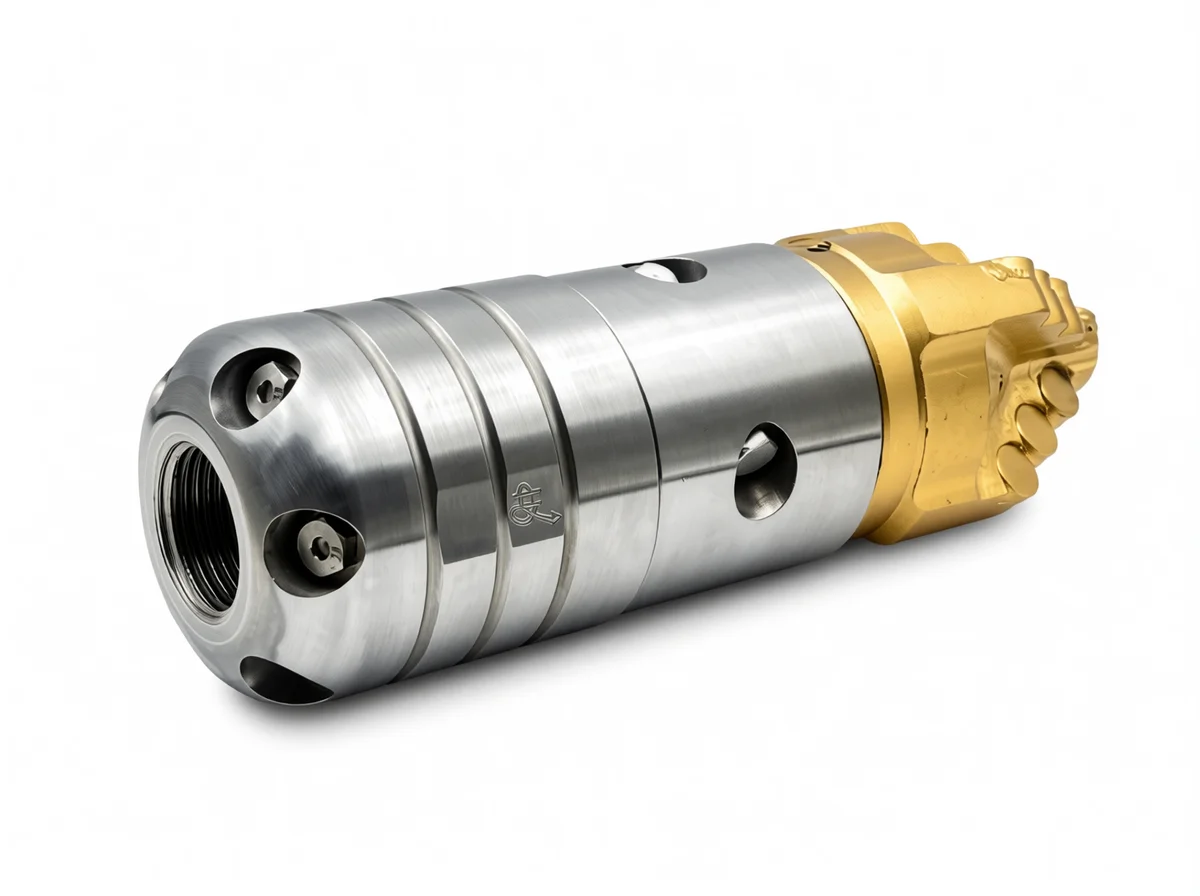
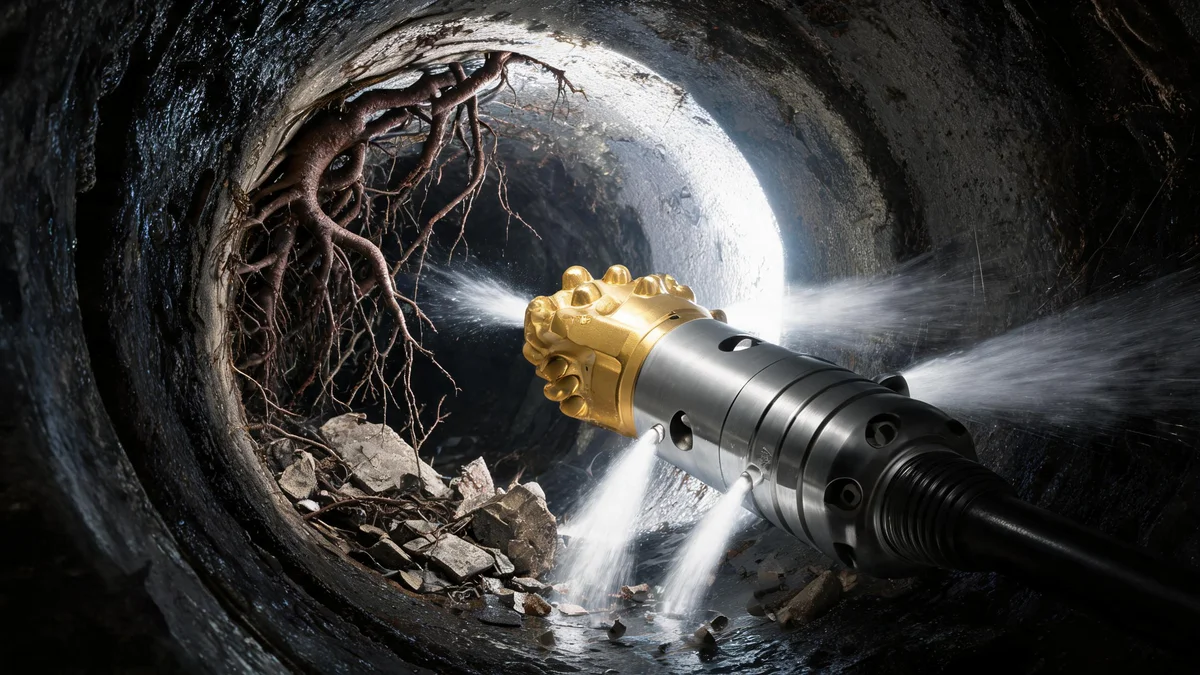
The Rock Pagoda Nozzle takes the rotating nozzle concept and cranks it up a notch. The key difference is the front head: instead of a tiered pagoda shape, it's equipped with PDC (Polycrystalline Diamond Compact) spherical cutter buttons embedded in a diamond composite matrix. This is the nozzle you reach for when the Pagoda isn't aggressive enough.
PDC Cutter Technology
PDC cutters are the same technology used in oil and gas drilling — a layer of synthetic diamond bonded to a tungsten carbide substrate. These spherical buttons are incredibly hard and wear-resistant, and they physically grind, chip, and pulverize material as the nozzle rotates and pushes forward.
For the drain professional, this means you can tackle blockages that would otherwise require a mechanical cutter or root saw — but without the risk of damaging the pipe and with the added benefit of simultaneous high-pressure water cleaning.
What It Handles That the Standard Pagoda Can't
Both nozzles use the same rotating 360° side-jet cleaning principle. The difference is at the front:
Heavy Root Intrusion
PDC buttons grind through dense root masses faster and more thoroughly than the pagoda's chisel edges.
Concrete & Block Debris
Construction debris, concrete chunks, and hardened mortar blocks — material that would dull a standard head quickly.
Extreme Scale Buildup
Decades-old mineral scale so thick it has reduced pipe diameter by 50% or more.
Longer Service Life
PDC cutters and diamond composite construction hold their cutting edge far longer than hardened steel.
Technical Specifications
| Parameter | BT0.5 | BT1.2 | BT3.3 | BT5 |
|---|---|---|---|---|
| Part # | BT0.5 | BT1.2 | BT3.3 | BT5 |
| Material | Wear-resistant Hardened Stainless Steel + Diamond Composite | |||
| Hose Connection | 3/8" F | 3/4" F | 1" F | 1" F |
| Flow (LPM) | 60 | 170 | 215 | 215 |
| Pressure (Bar) | 137 | 137 | 172 | 172 |
| Rear Jets | 6 x M6 | 6 x M6 | 6 x M10x1 | 6 x M10x1 |
| Rotating Jets | 4 x M6 | 4 x M6 | 4 x M10x1 | 4 x M10x1 |
| Jet Angle Backward | 35° | 20° | 25° | 25° |
| Jet Angle Sideway | 90° | 90° | 90° | 90° |
| Dimensions (Φ x L mm) | 36 x 107 | 49 x 136 | 75 x 159 | 75 x 207 |
| Working DN (mm) | 60-150 | 80-200 | 100-300 | 100-300 |
| Weight (Kg) | 0.5 | 1.2 | 3.3 | 5 |
Interface Thread: NPT or BSPP available on request. Max Pressure: 172 Bar. Different flows and pressures available on request. All ceramic inserts are replaceable.
Applications
The Rock Pagoda is the nozzle for the jobs you'd otherwise call in a root saw or mechanical cutter. If you're dealing with heavy root intrusion, concrete chunks in the line, or scale so thick it's nearly closing the pipe, the PDC cutter head will grind through it while the rotating jets clean the walls behind it.
Pagoda vs. Rock Pagoda: Which One Do You Need?
Both nozzles share the same core technology — rotating 360° side jets, rear propulsion jets, hardened stainless steel construction, replaceable ceramic inserts. The difference is in the front head and what that means for the jobs you can tackle.
| Feature | Pagoda Nozzle | Rock Pagoda Nozzle |
|---|---|---|
| Front Head | Tiered pagoda pyramid (hardened steel) | PDC spherical cutter buttons (diamond composite) |
| Best For | Hard scale, lime deposits, light roots, general descaling | Heavy roots, concrete debris, extreme scale, severe blockages |
| Cutting Aggression | High (chisel action) | Very high (grinding action) |
| 360° Wall Cleaning | ✓ 4 rotating side jets at 90° | ✓ 4 rotating side jets at 90° |
| Rear Jets | 6 rear jets (20-35° angle) | 6 rear jets (20-35° angle) |
| Material | Hardened stainless steel | Hardened stainless steel + diamond composite |
| Replaceable Ceramic Inserts | ✓ Yes | ✓ Yes |
| Max Pressure | 172 Bar | 172 Bar |
| Size Range | DN 60-300 (4 models) | DN 60-300 (4 models) |
| Ideal For | Regular fleet nozzle, maintenance & descaling | Problem-solver nozzle, toughest blockages |
Our Recommendation
If you're building out your nozzle inventory from scratch, here's what we suggest:
- Start with a Pagoda nozzle in the size you use most (CBT1 for DN80-200 is the most versatile). It will handle 70-80% of your tough cleaning jobs — descaling, light root work, grease removal, pre-inspection cleaning.
- Add a Rock Pagoda when you start running into jobs where the Pagoda isn't enough — heavy root systems, concrete debris, severely scaled pipes. Think of it as your "break glass in case of emergency" nozzle that turns impossible jobs into billable ones.
- Carry both if you're doing a lot of municipal or industrial drain work. Having both on the truck means you can switch out on site without a return trip, which pays for itself on the first job it saves.
Getting the Best Results from Your Rotating Nozzle
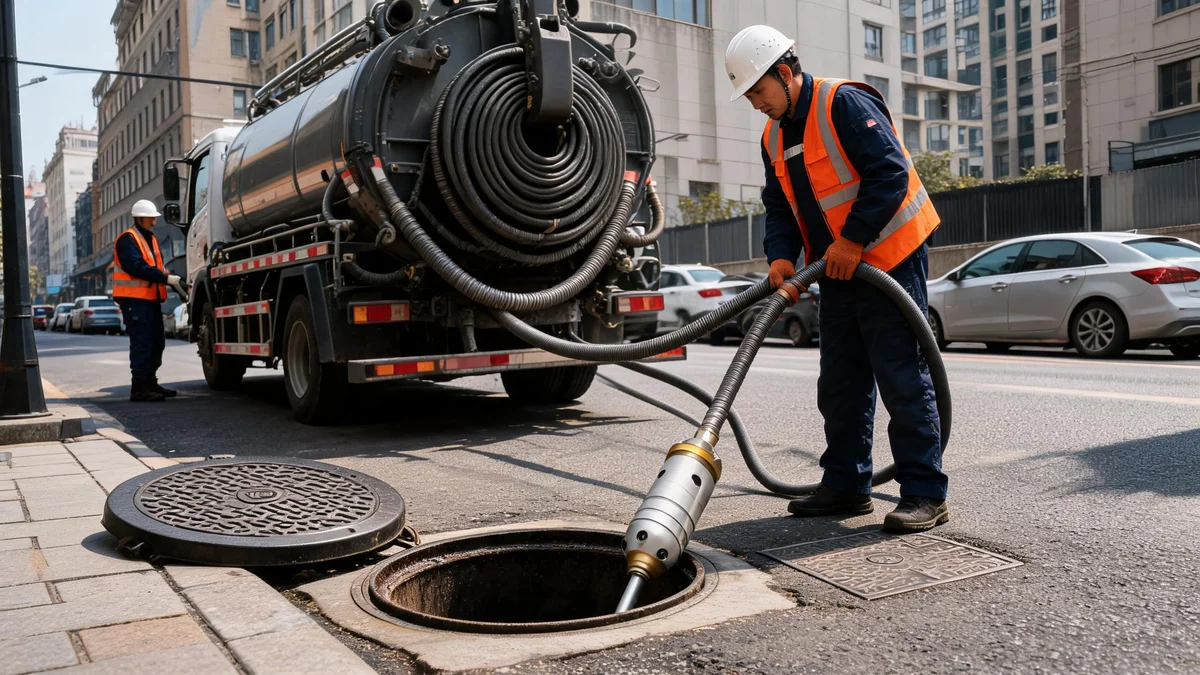
Having the right nozzle is half the battle — using it correctly is the other half. Here are some tips from the field to help you get the most out of your rotating nozzle investment:
- Match the Nozzle Size to the Pipe A nozzle that's too small won't clean the walls effectively; one that's too large won't pass through restrictions. Use the Working DN range as your guide and size down for pipes with known offsets or damage.
- Make Sure You Have Enough Flow Rotating nozzles need sufficient water flow to spin properly and deliver impact. Check the flow rating of the nozzle against your jetter's output. Too little flow = slow rotation = poor cleaning.
- Work Back and Forth Don't just blast through the pipe once. Make multiple passes — feed in slowly, pull back, feed in again. Each pass chips away more material. The rotating action means you're cleaning new surface on every revolution.
- Start Low, Work Up For severely blocked pipes, start with the nozzle positioned just inside the blockage and work it from the near side first. Once you've opened a path, advance gradually. This prevents the nozzle from getting stuck.
- Inspect Ceramic Inserts Regularly Worn or damaged inserts reduce nozzle performance. Check them after every heavy job, and replace them at the first sign of wear. The nozzle works much better with fresh ceramic inserts than with worn drilled holes.
- Don't Forget the Nozzle Is Rotating The spinning action generates torque on the hose. Be aware of this when feeding and retrieving — the hose will want to twist. Use a hose guide and keep clear of the manhole opening.
- Pair with CCTV for Documentation The best way to show customers the value of your work? Before and after camera footage. A rotating nozzle leaves pipe walls so clean you'll actually see the pipe material — and that sells the next job.
Replaceable ceramic inserts are one of the biggest advantages of these nozzles. Instead of buying a whole new nozzle body when the jets wear, you just swap out the inserts. This extends the nozzle's service life several times over compared to drilled nozzles — making the upfront investment well worth it.
Final Thoughts
If you're still tackling hard scale, lime deposits, and root intrusion with nothing but a standard jet nozzle, you're working harder than you need to — and your results probably show it. A rotating nozzle is one of those tool upgrades that pays for itself quickly: faster jobs, better results, fewer callbacks, and the ability to take on work you would have previously turned down.
The Pagoda Nozzle is an excellent all-around rotating nozzle for general descaling, light root cutting, and routine heavy-duty cleaning. It's the workhorse you'll reach for on most tough jobs.
The Rock Pagoda Nozzle with PDC cutter technology is the problem-solver for the jobs where even the Pagoda isn't enough — heavy roots, concrete debris, extreme scale. If you've ever had a job that made you think "I need a better tool for this," this is that tool.
Both nozzles share the same replaceable ceramic insert design, hardened stainless steel construction, and 360° rotating jet action. The question isn't whether you need a rotating nozzle — it's how soon you'll wonder how you ever worked without one.
Horizon Integrity
Industrial Cleaning Equipment Specialist · Horizon Integrity